Silage Spreader | TMR Feed Mixer Wagon for Livestock
| 용량 | 3–5 m³ |
| Power Type | Electric or Diesel |
| Mixing Type | Horizontal or Vertical |
| 생산 용량 | Up to 3 t/h |
| Feeding Method | Double-side Automatic Feeding |
| 애플리케이션 | Cattle & Sheep Farms |
이제 기술적인 세부 사항에 대해 프로젝트 관리자에게 문의하실 수 있습니다.
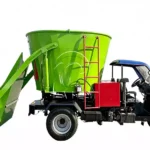
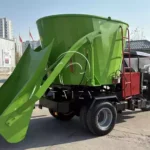
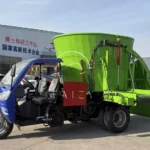
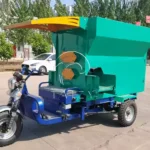
The silage spreader integrates feeding, grinding, TMR mixing, transportation, and automatic spreading into a single unit. It effectively addresses issues such as high labor costs, uneven feed mixing, and significant forage waste, enabling precise and standardized management of daily rations for cattle and sheep.
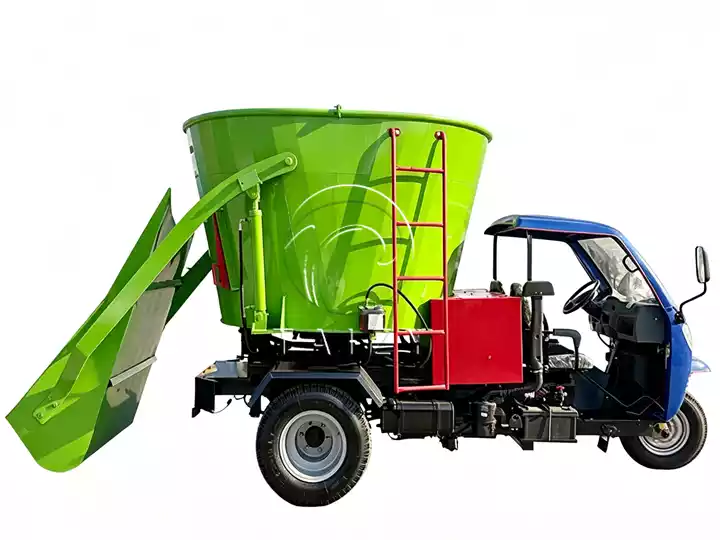
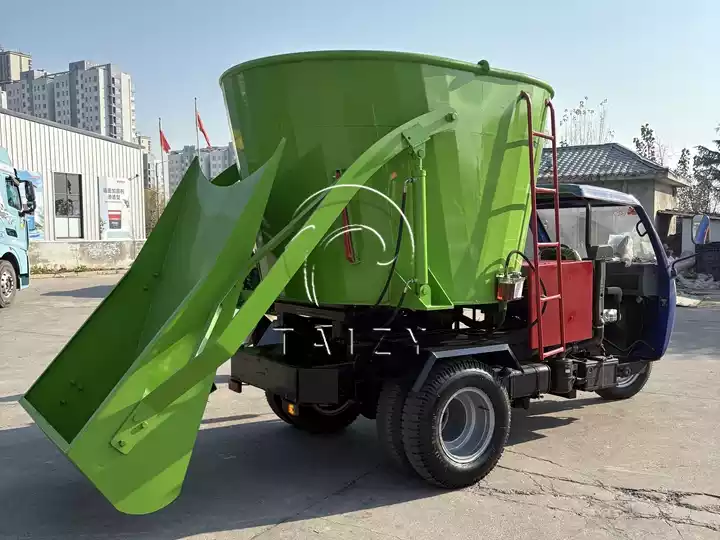
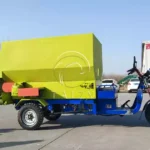
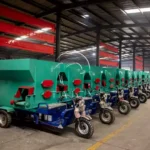
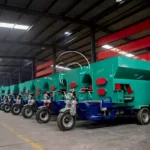
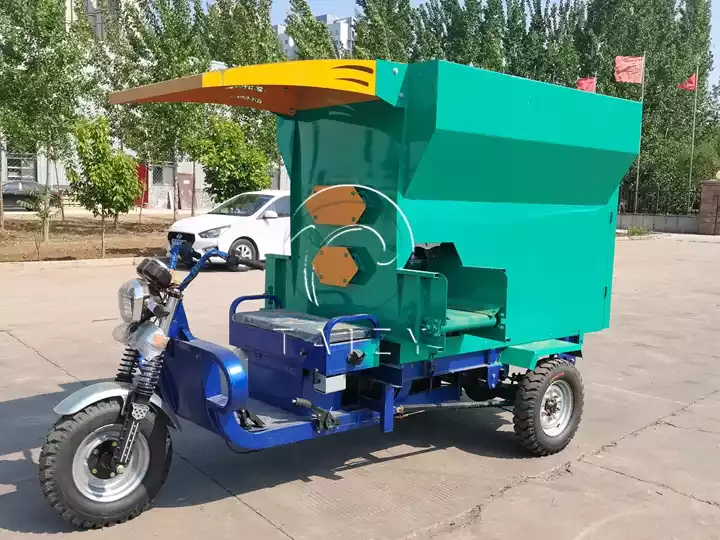
The equipment features wear-resistant mixing blades, a multi-shaft mixing system, and an automatic weighing configuration. It utilizes a three-wheeled vehicle chassis and offers both electric and diesel power options, as well as horizontal and vertical mixing configurations.
Our silage spreaders come in two mainstream capacities: 3 m³ and 5 m³. The 3-cubic-meter electric model fits small and medium cattle and sheep farms, while the 5-cubic-meter diesel model can feed 300 to 500 cattle or sheep in one full tank. Its maximum working efficiency reaches 3 tons per hour.
Main applications of the silage spreader
- Large-scale cattle & sheep farms: ideal for dairy farms, beef cattle farms, and sheep breeding bases. Standard TMR total mixed ration feeding improves milk output and livestock weight gain.
- Small & medium family farms: suitable for farms with dozens to hundreds of livestock. It replaces manual feeding, cutting labor costs sharply, and one worker can finish all daily feeding work.
- Compatible with all kinds of forage: it evenly mixes corn silage, hay, straw, distillers’ grains, pellet feed, soybean meal, and all other ruminant feeds with stable mixing performance.
- Applicable to various farming environments: works well in enclosed barns, open pastures, and semi-open sheds. Electric models are quiet and eco-friendly for indoor use, while diesel models deliver powerful performance for heavy outdoor feeding tasks.
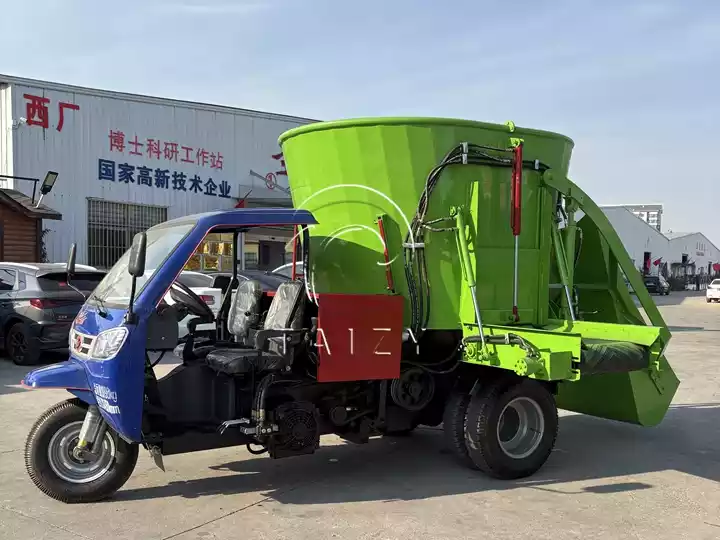
Why do farms choose TMR feed mixer-spreaders?
- All-in-one design saves labor: it integrates mixing, transporting, and spreading. One worker can finish all feeding work.
- Even feed mixing cuts waste: wear-resistant blades crush roughage evenly, stop selective eating, and raise feed utilization.
- Uniform & precise feeding for farms: two-way spreading with an optional weighing system for scientific ration matching.
- Flexible chassis fits all farm sites: compact tricycle chassis moves smoothly in barns and open pastures.
- Durable structure lowers maintenance cost: thick wear-resistant steel and premium blades reduce breakdowns and repair fees.
Electric, Diesel, Vertical, or Horizontal: which is right for you?
Electric TMR feed mixer wagon
Best For:
- Small cattle and sheep farms with 100–200 animals
- Indoor barns and enclosed livestock houses
- Farms with strict environmental or noise requirements
Key Features:
- Powered by a 72V battery system with low operating noise
- Zero emissions and low operating costs
- Compact design for easy movement through narrow barn aisles
- Simple maintenance, ideal for small and family-run farms
Diesel horizontal TMR silage spreader
Best For:
- Medium-sized farms with 300–500 cattle or sheep
- Outdoor ranches and open feeding areas
- Long-distance and continuous feeding operations
Key Features:
- Powerful diesel engine for reliable performance
- Horizontal mixing chamber with fast discharge speed
- Dual-shaft mixing system with multiple wear-resistant blades for efficient feed blending
- Hydraulic loading and unloading for higher productivity and continuous operation
Vertical TMR feed mixer wagon
Best For:
- Large dairy farms and commercial livestock operations
- Farms using high-fiber feeds such as hay and corn stalks
- Precision TMR feeding management
Key Features:
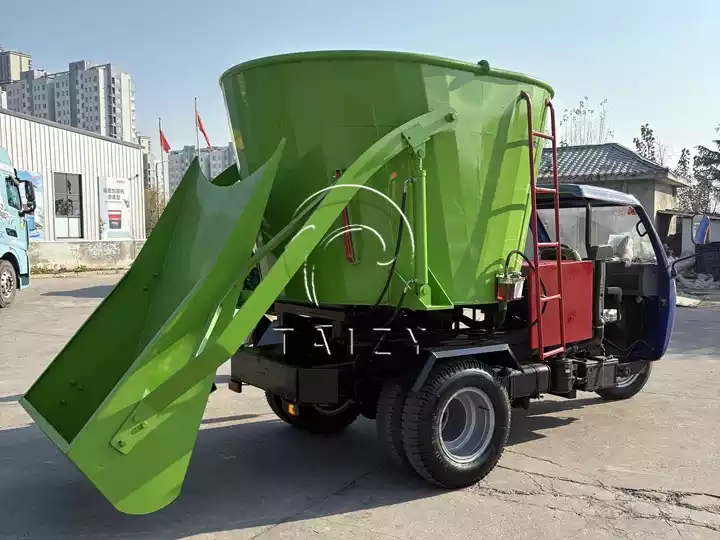
- Vertical auger design provides stronger cutting and mixing performance
- Ideal for processing long-fiber forage, hay, and crop straw
- Produces a more uniform Total Mixed Ration (TMR)
- Optional electronic weighing system for accurate feed formulation and precise feeding management
Horizontal vs. Vertical mixer-spreaders: which is better?
| Comparison Item | Horizontal TMR Feeder | Vertical TMR Feeder |
| Structure | Horizontal box-shaped hopper | Vertical cylindrical hopper |
| Mixing Effect | Fast mixing and quick discharge | Better fiber cutting and uniform mixing |
| Suitable Feed | Silage, concentrate, short forage | Hay, corn straw, high fiber feed |
| Main Advantage | High feeding speed | Better TMR quality |
| Recommended Farm | Small and medium farms | Large dairy and cattle farms |
TMR silage spreader core structure and workflow
- Automatic feeding: the diesel-powered vertical model can directly pick up hay bales and silage using a hydraulic feeding mechanism. Other models can be fed manually or with mechanical assistance to improve operational efficiency.
- Shredding and mixing: high-speed rotating blades shred coarse-fiber feed, while multiple sets of mixing shafts continuously blend the ingredients to ensure uniformity.
- Automatic transport: the flexible three-wheel chassis design features a small turning radius, allowing the machine to operate in confined spaces such as cattle barns and sheds.
- Bidirectional distribution: the mixed feed is evenly delivered to feed troughs via an auger or scraper conveyor system, reducing the need for manual handling.
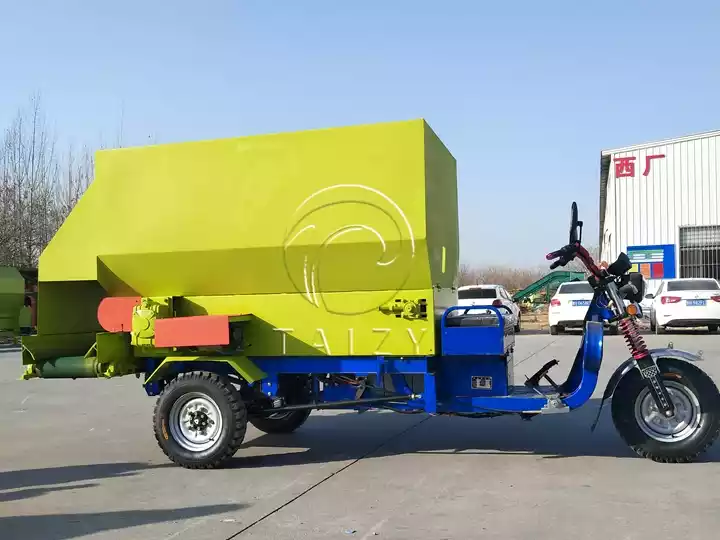
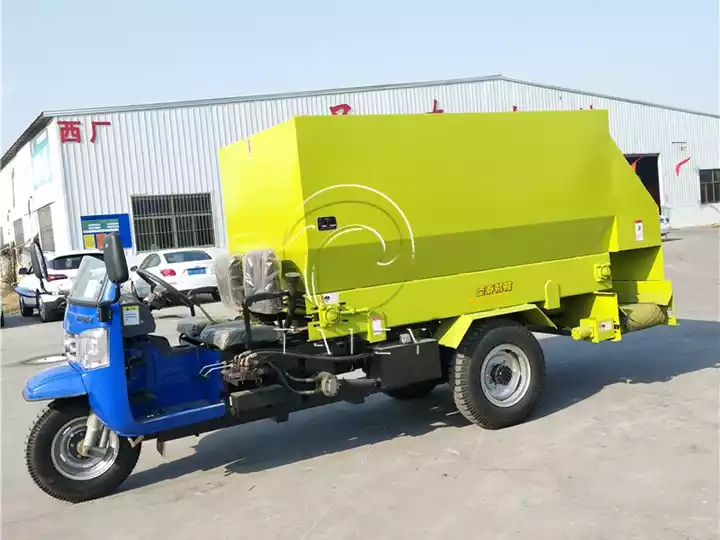
Technical parameters of the silage spreader machine
| Parameter | SL-3 Electric Horizontal | SL-5 Diesel Horizontal | 5m³ Vertical Diesel |
| 모델 | SL-3 | SL-5 | 5m³ Vertical TMR Mixer |
| 용량 | 3 m³ | 5 m³ | 5 m³ |
| Power Type | 72V Battery | 디젤 엔진 | 디젤 엔진 |
| Power Configuration | 72V Battery (6 pcs) | JD25 Diesel Engine (25– 30 HP) | High-power Diesel Engine |
| 생산 용량 | — | — | 3 t/h |
| Overall Dimensions | 3600 × 1500 × 2000 mm | 4700 × 1700 × 2200 mm | 5300 × 2300 × 2300 mm |
| Mixing System | Horizontal Auger Mixing | Horizontal Dual-Shaft Mixing | Vertical Auger Mixing |
| Blade Configuration | — | 36 Wear-resistant Blades | 5 Tungsten Carbide Blades |
| Loading Method | Manual Feeding | Loader Feeding | Hydraulic Rear Loading |
| 배출 방법 | Auger Conveyor | Hydraulic Scraper Conveyor | Hydraulic Discharge |
| Feeding Direction | Double-side Feeding | Double-side Feeding | Double-side Feeding |
| Weighing System | Optional | Automatic Weighing System (Optional) | 4 Load Cells + XK3190- A6 Indicator |
| Main Shaft Speed | — | — | 23 r/min |
| Brake System | Oil Brake | Oil Brake | Oil Brake |
| Chassis | Three-wheel Electric Chassis | Three-wheel Truck Chassis | Three-wheel Truck Chassis |
| Wear-resistant Plate | — | Manganese Steel | 12 mm Bottom Plate / 6 mm Side Plate |
| Recommended Application | Small Cattle & Sheep Farms | Medium-sized Livestock Farms | Large Dairy & Commercial Farms |
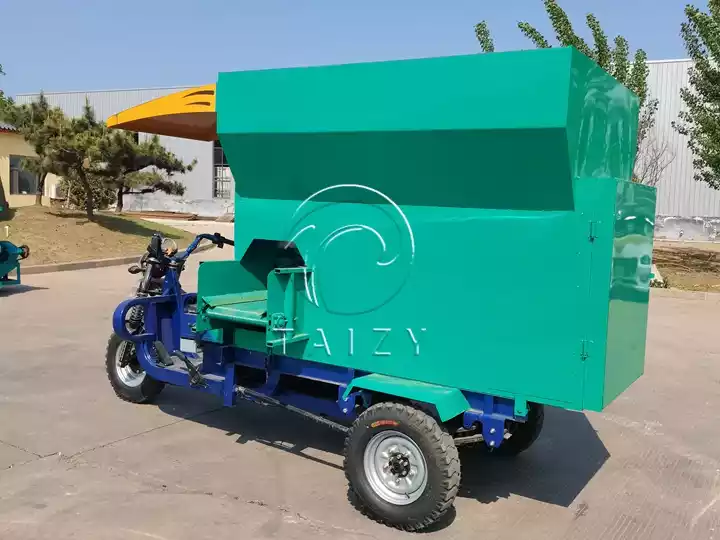
How to choose the right TMR silage mixer wagon?
Choosing the right silage spreader depends on your farm size, feed type, and working environment. Here are three key factors to consider:
Choose the right capacity based on your herd size
- 100–200 cattle or sheep: 3 m³ Electric TMR Feed Mixer Wagon
- 300–500 cattle or sheep: 5 m³ Diesel Horizontal TMR Feed Mixer Wagon
- More than 500 cattle: 5 m³ Vertical Diesel TMR Feed Mixer Wagon
Selecting the appropriate capacity helps improve feeding efficiency while avoiding unnecessary operating costs.
Choose the right mixing structure based on feed type
- Mainly silage, concentrate, and short forage: choose a Horizontal TMR Silage Spreader for faster mixing and discharge.
- Mainly hay, corn stalks, and other high-fiber forage: choose a Vertical TMR Feed Mixer Wagon for better cutting performance and more uniform feed mixing.
Choose the right power source based on your working environment
- Indoor barns or enclosed livestock houses: an Electric TMR Silage Mixer Wagon offers quiet operation, zero emissions, and lower running costs.
- Outdoor ranches or large-scale farms: a Diesel TMR Silage Spreader provides stronger power, longer operating time, and greater reliability for continuous field work.
Professional manufacturer with complete support services
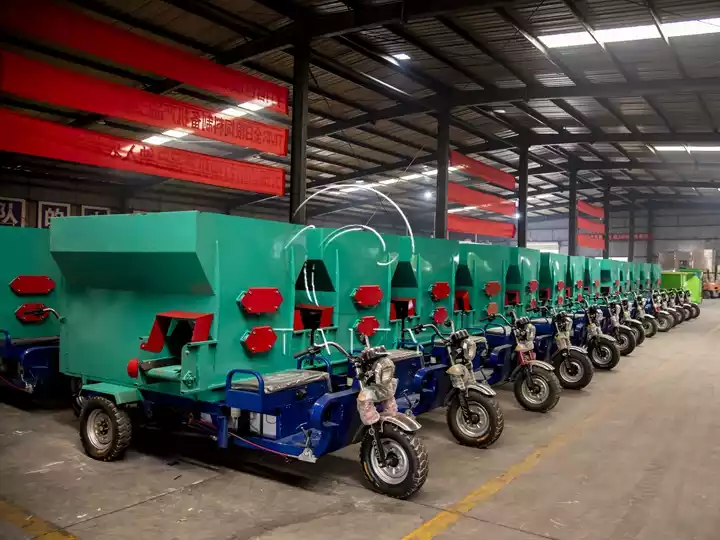
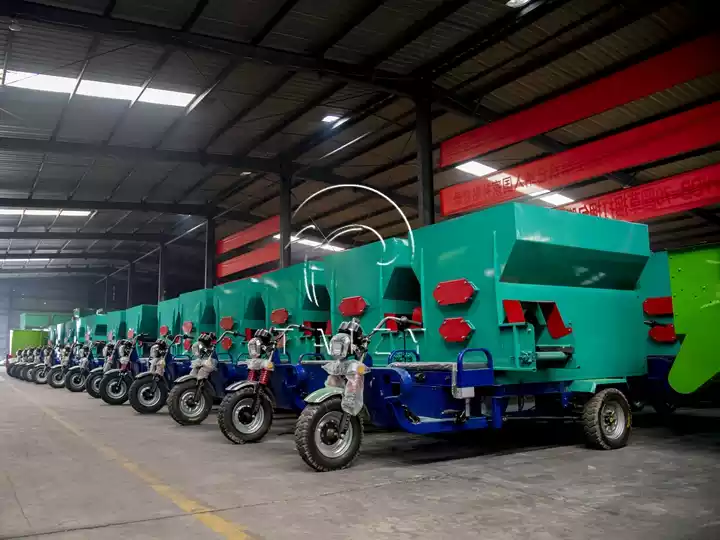
As an experienced manufacturer of livestock feeding equipment, we provide customized silage spreader solutions based on your herd size, barn layout, feed types, and power requirements.
Our services include:
- Free machine selection and feeding solution consultation.
- Factory testing, installation guidance, and operator training.
- Reliable after-sales service and genuine spare parts supply.
- One-stop livestock equipment solutions for modern cattle and sheep farms.
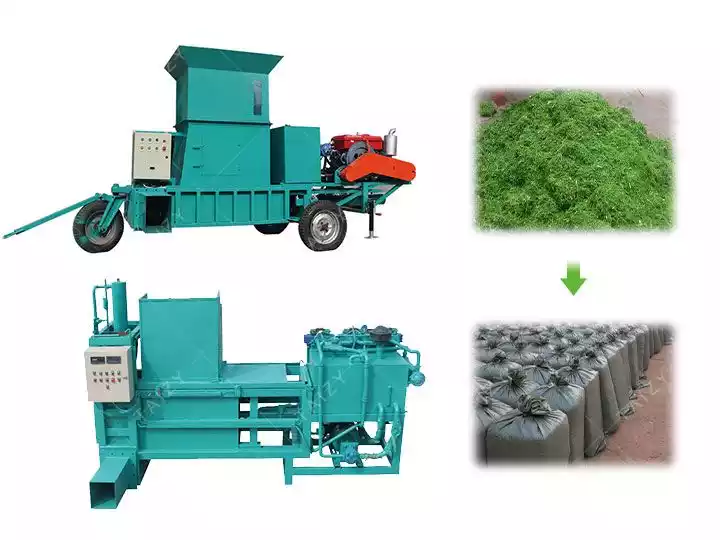
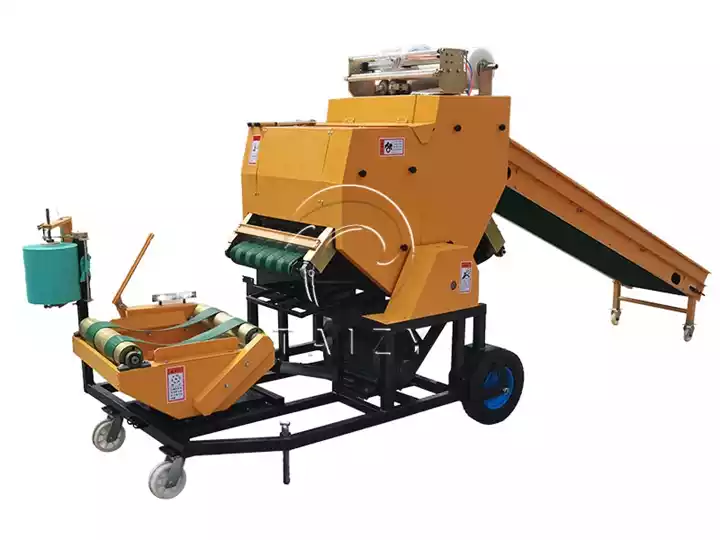
In addition to the silage spreaders, we also offer stationary TMR forage feed mixers, 사일리지 포장기 포장지, and other livestock equipment. Contact us today for professional model recommendations and a customized feeding solution tailored to your operation.