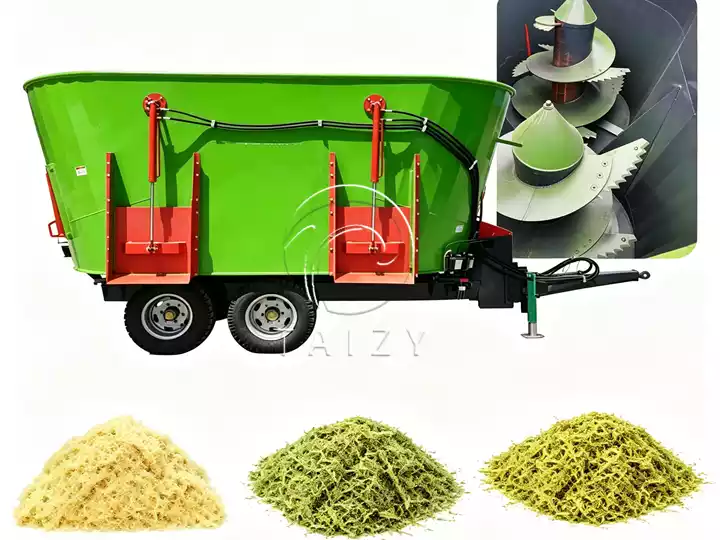
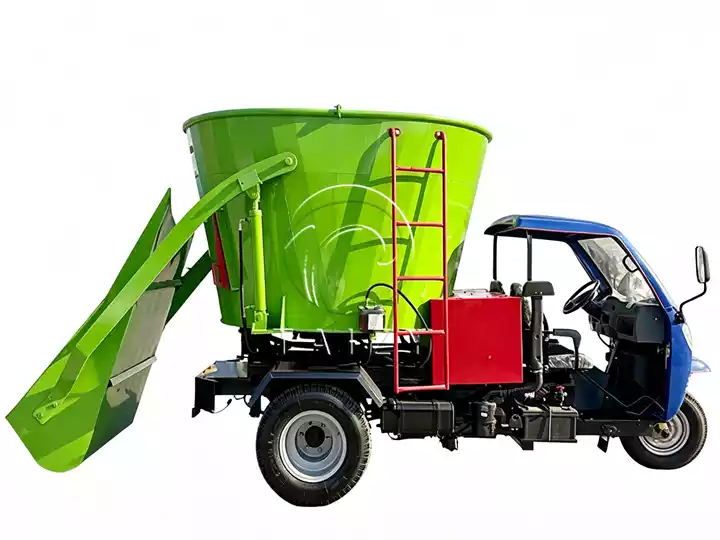
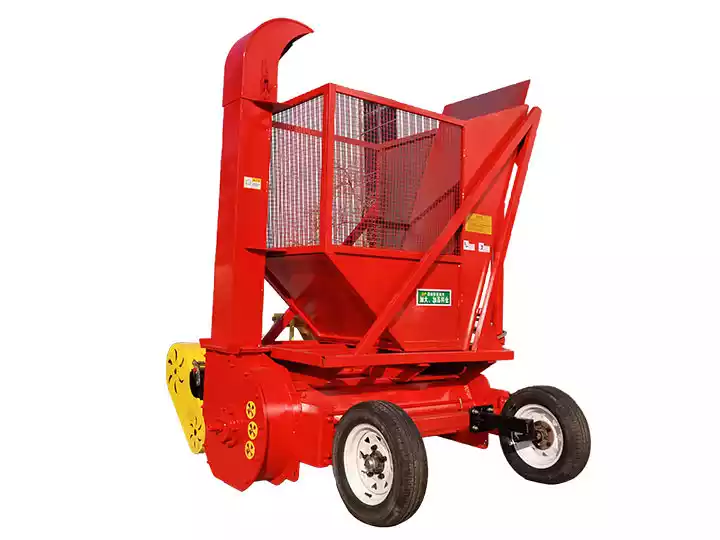
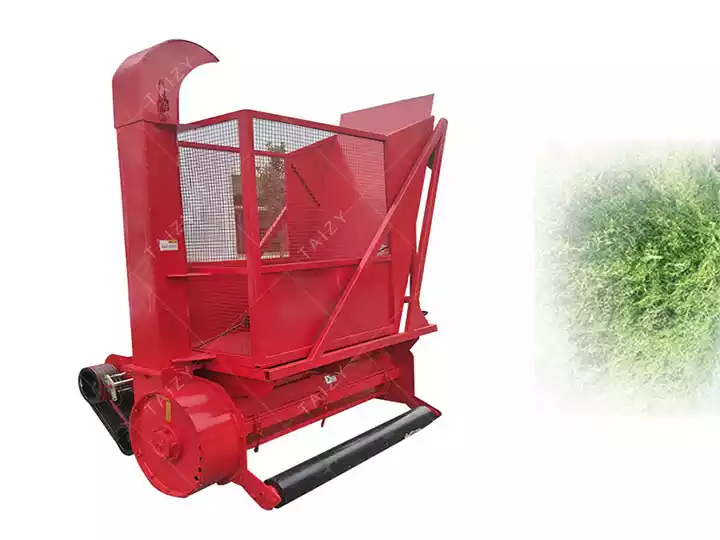
The vertical TMR mixer combines chopping, stirring, and mixing into a single unit, capable of processing silage, straw, hay, and concentrates. It is used in dairy farms, beef cattle farms, and sheep farms.
The Taizy vertical TMR mixer combines chopping, mixing, and stirring into a single unit. Featuring a vertical auger design, it thoroughly blends silage, hay bales, straw, concentrates, minerals, and various additives to create a nutritionally balanced total mixed ration (TMR).
With capacities ranging from 3 to 36 m³, the equipment meets the needs of cattle and sheep farms of various sizes. The 7 m³ model, for example, has a processing capacity of 3,000–4,000 kg per hour, sufficient to meet the daily feeding requirements of approximately 200–2,000 head of cattle. This effectively improves feed utilization, reduces waste, and significantly enhances profitability in farming.
Working video of the vertical forage TMR mixer machine.
Applications of the silage feed TMR mixer
Dairy farms
Beef cattle farms
Sheep farms and large-scale ruminant farms
Silage processing centers
Modern farm TMR feeding systems
Suitable Ingredients Include:
Corn silage
Alfalfa
Hay bales
Stubble feeds such as wheat straw and rice straw
Concentrates and feed supplements
Vitamins, minerals, and nutritional additives
Through uniform batching and mixing, this system effectively ensures that every portion of feed is nutritionally balanced, preventing selective eating in livestock.
vertical TMR mixer for salelivestock feed mixer
Vertical TMR feed mixer machine advantages
Efficient chopping and mixing: the vertical auger, equipped with highly wear-resistant Cr12MoV alloy blades, quickly chops long-fiber forage and ensures uniform mixing.
Reduced feed waste: mixing the entire daily ration prevents selective feeding by cattle and sheep, thereby improving feed conversion and utilization rates.
Robust and durable: the bottom of the mixing chamber features 20mm thick wear-resistant steel plates, while the side panels are 8mm thick, making it suitable for long-term, high-intensity operation.
Compatible with multiple power sources: supports various configuration options, including electric motor drive, diesel engine drive, and tractor PTO drive.
Equipped with a smart weighing system: monitors feed intake in real time, improves recipe accuracy, and enables scientific feeding management.
Lower investment costs: compared to horizontal TMR equipment, the vertical structure is simpler, easier to maintain, and more cost-effective to purchase.
Supports customization: can be customized according to customer needs, including voltage, color, discharge method, and hydraulic loading configurations.
7cbm TMR silage feed mixersilage mixer wagon
Operation principle of silage TMR mixer wagon
During operation, raw materials such as silage, hay bales, straw, and concentrated feed enter the mixing chamber through the feed inlet.
The vertical auger rotates under power, continuously lifting the material upward before allowing it to fall naturally, creating a cyclical tumbling motion.
Wear-resistant cutting blades mounted on the auger simultaneously shred long-fiber materials, ensuring that all ingredients are uniformly mixed within a short period of time.
After mixing is complete, the feed is rapidly discharged through the side outlet, enabling continuous and efficient operation.
When selecting a TMR feed mixer, we recommend focusing on the following factors:
Farm size
Under 200 heads: 3–7 m³ models
200–500 heads: 7–12 m³ models
Over 500 heads: 16 m³ and larger models
Feed type
If you will be processing long-fiber materials such as whole-bale hay or straw on a long-term basis, we recommend selecting a model equipped with a reinforced cutting system.
Power requirements
If a stable power supply is available, an electric motor drive is a suitable option; for operations involving frequent relocation, a tractor PTO drive or diesel engine drive is recommended.
Automation needs
Optional configurations such as an electronic weighing system, hydraulic loading device, and conveyor belt can be added to improve overall operational efficiency.
dairy farm feed mixerforage mixer machine
FAQ
What is the difference between a vertical TMR mixer and a horizontal TMR mixer?
Vertical mixers offer better fiber cutting performance and lower investment costs, while horizontal mixers provide faster mixing speeds.
Can the machine process wet silage?
Yes. It is specially designed to handle wet silage and other high-moisture forage materials.
How long does one mixing cycle take?
Typically 5–15 minutes, depending on the feed ingredients and batch size.
Do you support customized voltage?
Yes. We can customize the machine to meet different international voltage standards.
Is a weighing system available?
Yes. An electronic weighing system can be equipped for precise feed formulation.
How much does the vertical TMR mixer cost?
The price depends on the capacity, power type, and optional configurations. Contact us for a detailed quotation.
Contact us
If you are building a modern cattle or sheep farm, we can also provide you with a complete forage processing solution, including straw shredder harvester machinesand silage baling wrapping machines. Please feel free to contact us at any time for professional equipment recommendations and competitive quotes.
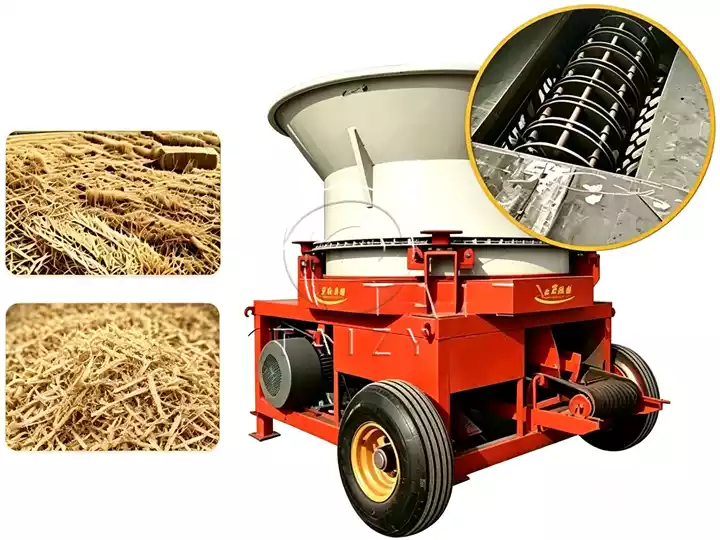
The straw bale shredder directly processes whole hay and straw bales without pre-cutting. With a capacity of 2-18 t/h, it delivers efficient crushing for livestock farms and biomass processing.
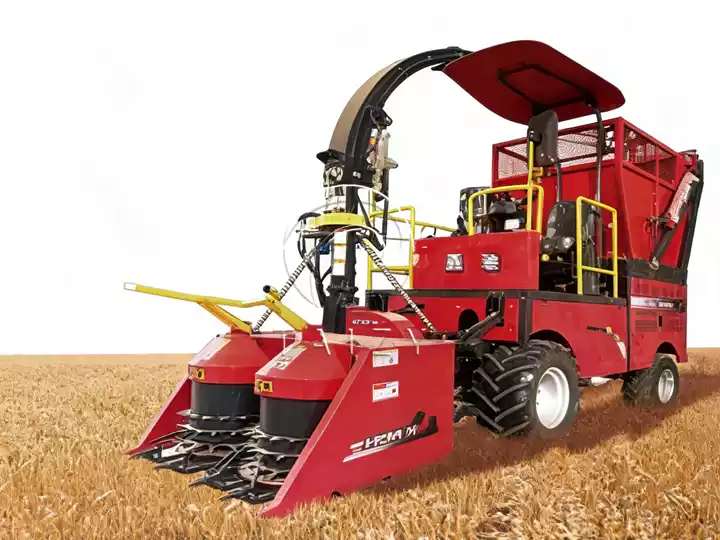
The silage green harvester integrates cutting, chopping, conveying, and loading functions. Available in wheeled, crawler, and mounted types, it improves forage harvesting efficiency and feed quality.
Discover electric and diesel silage spreaders with horizontal and vertical TMR mixing systems for efficient feeding, lower labor costs, and improved feed utilization on livestock farms.
Taizy manure spreader is PTO-driven and can evenly apply dry and wet manure, organic, and granular fertilizer. With a 3–12m³ capacity, it is suitable for use in large-scale farmland and livestock farming operations.
The manure cleaning machine combines collection, conveyance, and automatic unloading, completing a single operation in 3 to 8 minutes, thereby significantly improving farm hygiene and production efficiency.
The silage harvesting and recycling machine is used for crushing straw and other crop residues. The straw is effectively crushed into fine particles for subsequent utilization, such as composting, feed preparation, or …