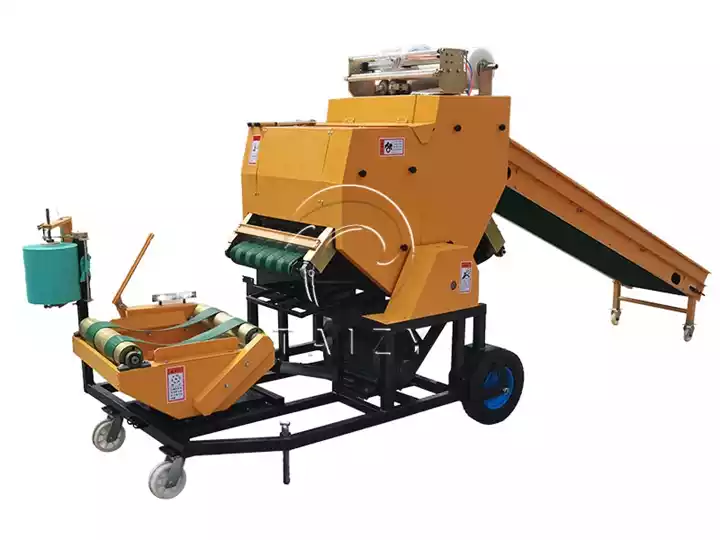
Cut Forage Production Labor Cost with High Capacity Silage Baler of 90×90cm Bale Size
Large livestock farms and commercial silage processing plants always face the pressure of rising labor costs in silage baling work.
Small traditional balers need plenty of workers to finish forming and wrapping. In contrast, our new high capacity silage baler with a 90×90 cm bale size significantly reduces labor requirements and total running costs for full silage production lines.
High capacity silage baler cuts labor input via high output
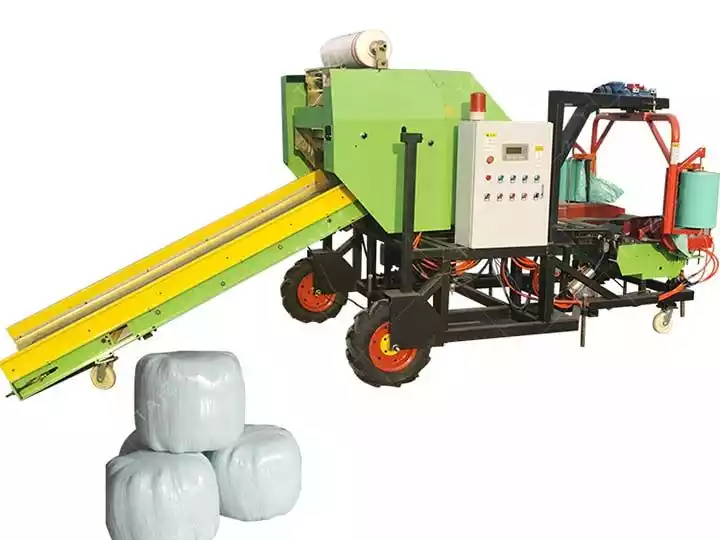
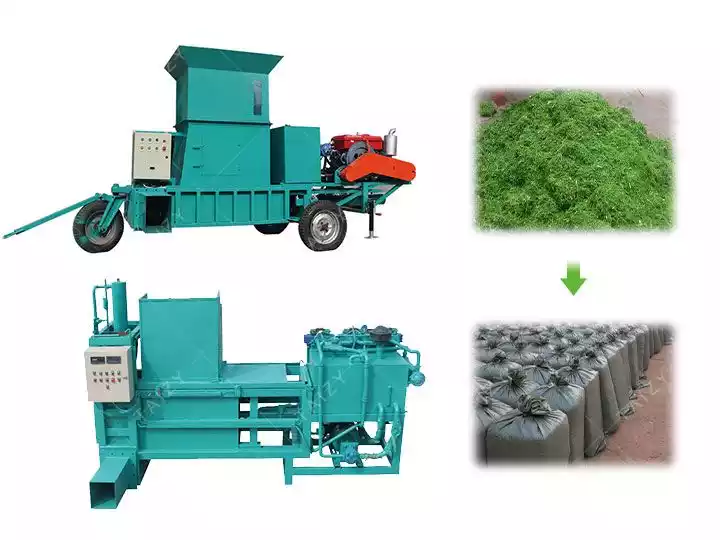
This high-output silage baler is fitted with over 28 high-pressure compression rollers, making dense 90×90cm bales weighing 300 to 430 kg each.
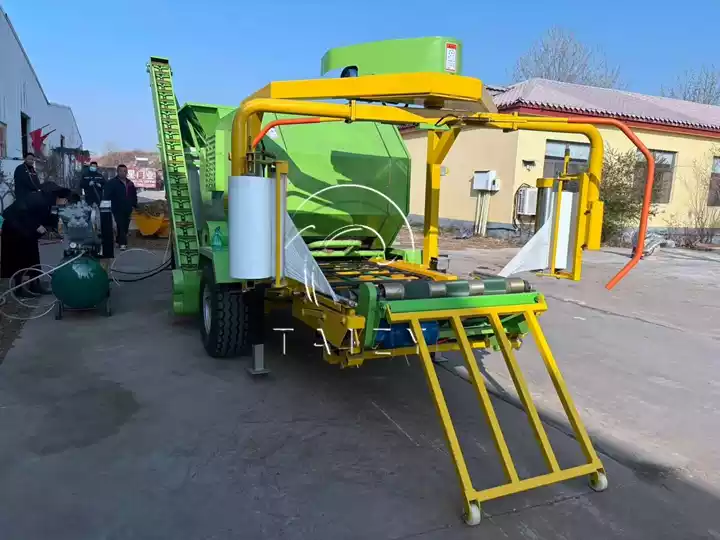
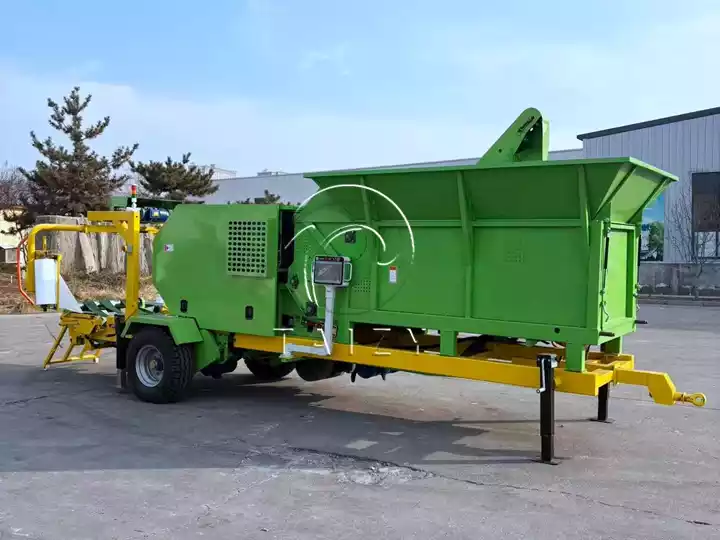
It can make 55 to 60 bales every hour, with total output of over 23 tons per hour. Its powerful production capacity replaces 8 to 10 workers who do baling and wrapping manually, cutting daily labor expenditure by more than half.
The dual-arm automatic wrapping system removes repetitive manual wrapping work. Operators only need to monitor feeding progress, cutting long-term costs on staff recruitment, training and worker turnover.
Dense 90×90cm bales reduce storage and transportation cost
With high-pressure roller compression, bales produced by this high-capacity silage baler wrapper are tight and uniform. Standard 90×90cm bales take up less warehouse space and lower delivery times.
Farms can save much money on transport and warehouse rent compared with loose small silage bundles from ordinary balers.
The baler’s heavy-duty frame and wear-resistant compression rollers support continuous daily production. It rarely breaks down, cutting extra costs on spare parts and production downtime.
For large silage production lines, the one-time investment of this machine can be recovered within one harvest season via savings on labor and logistics.
For dairy and cattle farms with large silage processing lines, adopting this 90×90cm high capacity silage baler is an effective solution to cut all kinds of production costs and raise overall silage output.